• instagram (5)
  • 65e82dd72e92827394
  • 65e82dd7a74e048637
  • 65e82dd83039430728
Leave Your Message
0%

Picking out a reliable Saltwater Tester in 2026 isn’t just about looking at screen size, price, or what the specs claim. These days, buyers around the world have to consider all sorts of factors — like different salinity scales, calibration fluids, temperature settings, and water environments. For example, a tester that works great next to a warm reef tank might not give accurate results in a cold aquaculture facility or a seaside lab.

Back in 2023, NOAA Fisheries reported that 94% of U.S. fish stocks weren’t overfished. That’s pretty good news, and it’s thanks to diligent monitoring — not guesswork. Meanwhile, the FAO’s latest report on global fisheries and aquaculture points out how much responsible water management and reliable Water Quality Testing really matter. Now, these reports aren’t directly measuring the saltwater tester market, but they do highlight why accurate measurements in the field are so crucial.

Dr. Claude E. Boyd, an aquaculture water-quality expert at Auburn University, sums it up simply: “Measure first, then adjust.” It sounds obvious, right? But a lot of folks still make the mistake of changing salinity levels before checking calibration, temperature, or sample contamination — which can lead to inaccurate readings and unnecessary chemical tweaks.

This guide for 2026’s top saltwater testers is all about diving into the details that are often overlooked. We look at different types of devices like refractometers, Conductivity Meters, digital salinity testers, and multi-parameter tools. Plus, we cover calibration routines, automatic temperature compensation, IP ratings, how much replacement parts cost, and regional support options.

No device is perfect, though. Even a high-end model can fail if not maintained properly. On the flip side, a budget-friendly tester might do the trick for regular checks. Ultimately, selecting the right one comes down to how consistent the results need to be, what you’re using it for, and how disciplined you are with maintenance. And remember — look for real evidence to back up claims, not just exaggerated promises.

2026 Top Saltwater Tester Buying Guide for Global Buyers

What Is a Saltwater Tester and Why Does It Matter?

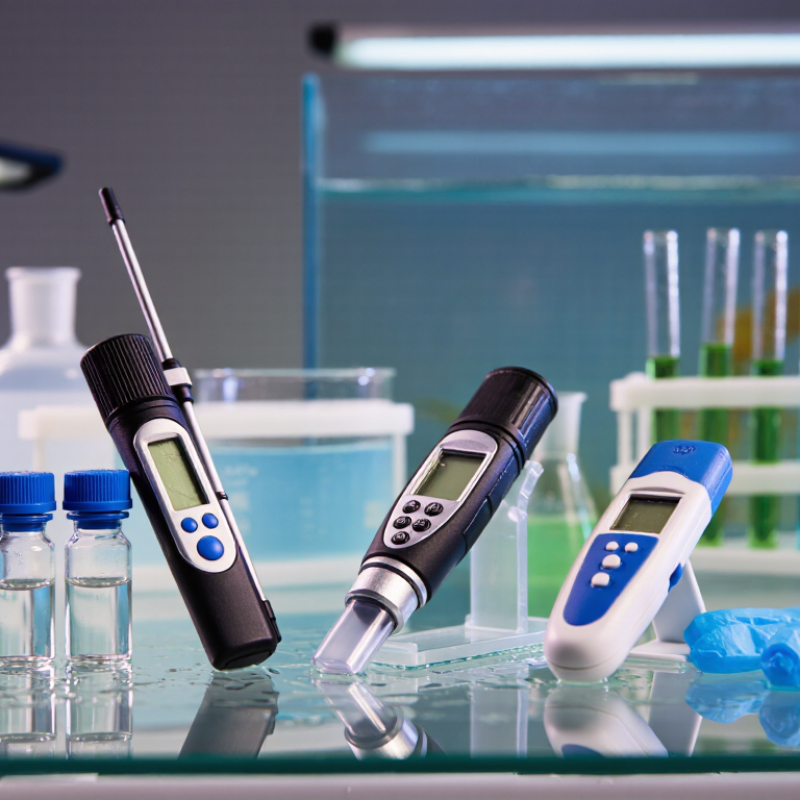
A saltwater tester measures dissolved salts in water, usually through salinity, conductivity, or specific gravity readings. Some instruments also check temperature and pH, but these are separate measurements. The device matters because marine organisms react quickly to chemical changes. A small reading shift may affect fish, coral, shellfish, or young stock. In aquaculture tanks, unstable salinity can increase stress, reduce feeding, and weaken disease resistance. In industrial water systems, salt levels can accelerate corrosion and damage sensitive equipment.

Accuracy depends on more than the screen reading. Rinse the probe with clean water, remove visible residue, and test a well-mixed sample. Temperature compensation is useful, yet it cannot correct a dirty or poorly stored sensor. Calibration solution should match the tester’s recommended range and remain uncontaminated. Record the result, time, water temperature, and sampling location. These details help reveal gradual changes that one reading can hide.

A tester is not a laboratory instrument. That limitation matters. Battery condition, air bubbles, mineral deposits, and expired calibration fluid can all mislead the user. I would compare an unusual result with a second method before making a major water change. Portable meters are convenient, but convenience can encourage careless testing. A careful routine, regular verification, and honest notes often provide more value than a costly device.

2026 Top Saltwater Tester Buying Guide for Global Buyers

What Is a Saltwater Tester and Why Does It Matter?

Saltwater testers measure salinity, usually through electrical conductivity, and may also display temperature, TDS, or specific gravity. The chart shows representative salinity levels in practical water categories. Average ocean salinity is about 35 ppt, while brackish water generally ranges from 0.5 to 30 ppt. Choosing a tester with an appropriate range, temperature compensation, and calibration function helps improve measurement reliability.

Which Water Quality Parameters Should a Saltwater Tester Measure?

Saltwater Salinity Testers should measure more than salt concentration. Salinity shows whether seawater matches the intended environment, but it does not reveal every risk. A reliable tester should also check temperature, because warm water can change readings and stress marine animals. Specific gravity and practical salinity are both useful, but users must understand which scale the device displays.

pH is another essential parameter. Sudden changes can affect shell formation and biological activity. In aquariums, ammonia and nitrite need close attention, especially after adding livestock or cleaning filters. Nitrate indicates longer-term waste accumulation. Dissolved oxygen can reveal poor circulation, crowded conditions, or equipment problems. Reef systems may also require alkalinity, calcium, and magnesium measurements for stable coral growth.

Tips: Calibrate testers with fresh reference solutions, not tap water. Rinse the probe after every use and keep sensors properly stored. Record readings with the date, temperature, and sampling location. I once trusted a stable salinity reading while ignoring rising nitrate; the water looked clear, but the system was not healthy. That mistake was a useful reminder: one number rarely explains seawater quality. For global buyers, check measurement units, calibration support, waterproof ratings, and replacement sensor availability before purchasing. Some inexpensive testers provide fast results but limited accuracy. Independent verification remains wise.

2026 Top Saltwater Tester Buying Guide for Global Buyers - Which Water Quality Parameters Should a Saltwater Tester Measure?

Water Quality Parameter Importance for Saltwater Testing Typical Marine Aquarium Reference Range Preferred Measurement Method Recommended Tester Performance Suggested Testing Frequency Buying Considerations
Salinity / Specific Gravity Essential
Controls osmoregulation and affects the health of fish, corals, invertebrates, and beneficial microorganisms.
Reef aquariums: 32–35 ppt or specific gravity of approximately 1.023–1.026 at 25°C.
Natural seawater is commonly close to 35 ppt.
Digital conductivity or salinity sensor, refractometer, or calibrated hydrometer. Resolution of 1 ppt or better; temperature compensation is strongly preferred; repeatability should be at least ±1 ppt. Every water change and at least weekly in an established aquarium. Verify whether the instrument reports ppt, PSU, conductivity, or specific gravity. These readings are related but should not be treated as identical without temperature and calibration information.
Temperature Essential
Influences metabolism, dissolved oxygen, chemical reaction rates, and the toxicity of some compounds.
Many tropical marine aquariums are maintained around 24–27°C (75–81°F), with stable conditions generally more important than a single exact value. Digital thermistor, RTD, or integrated temperature probe. Resolution of 0.1°C; accuracy of approximately ±0.5°C or better; automatic temperature compensation is useful for other measurements. Continuous monitoring is ideal; otherwise check daily. Choose a tester with a fast-stabilizing probe and an alarm or data-logging function if temperature swings are a concern.
pH Essential
Indicates acidity or alkalinity and affects ammonia toxicity, calcification, and biological processes.
Marine aquariums are often maintained near pH 7.8–8.4, with many reef systems commonly operated around 8.0–8.4. Glass-electrode pH meter or properly prepared colorimetric test. Resolution of 0.01–0.1 pH unit; two- or three-point calibration; automatic temperature compensation is preferred. Weekly and whenever livestock behavior or alkalinity changes unexpectedly. A replaceable probe, calibration reminders, and protection against dry storage can reduce long-term measurement errors.
Ammonia Essential
Unionized ammonia is highly toxic and can rapidly harm fish and invertebrates, especially in new or disturbed systems.
Total ammonia nitrogen should generally be undetectable in a healthy established marine aquarium. Any measurable rise requires investigation. Salicylate or indophenol colorimetric test; laboratory-grade ion-selective methods may also be used. Low-range detection should reach at least 0.05 mg/L as nitrogen or better; the test should state whether results are reported as NH3-N or NH3/NH4. During cycling, after adding livestock, or after equipment and filtration failures. Confirm the reporting unit. Ammonia toxicity depends on pH, temperature, and salinity, so a standalone ammonia number does not tell the whole risk picture.
Nitrite High Priority
Indicates incomplete biological nitrification and is especially important during aquarium cycling or after a biofilter disruption.
Commonly targeted at undetectable levels in established marine aquariums. Interpretation depends on the test scale and reporting unit. Diazotization-based colorimetric test or laboratory photometric method. Low-range detection around 0.1 mg/L or better; clear color separation at low concentrations is important. During cycling, after a major biological disturbance, and when unexplained livestock stress occurs. Look for a test that identifies whether results are expressed as nitrite ion or nitrite-nitrogen, because the numerical values differ.
Nitrate Essential
A final product of nitrification; excessive accumulation can encourage nuisance algae and may stress sensitive organisms.
Fish-only systems may tolerate higher concentrations, while many reef aquariums aim for approximately 1–10 mg/L as NO3-NO3? Wait. Cadmium-reduction or other chemical reduction colorimetric test; digital photometer for improved consistency. A useful range from approximately 0.2 to 100 mg/L as nitrate (NO3−), with a low-range resolution near 0.1–1 mg/L. Weekly or whenever feeding, filtration, or algae growth changes. Ensure the unit is nitrate as NO3− rather than nitrate-nitrogen as N. Do not compare results from different units without conversion.
Alkalinity Essential
Measures the water’s acid-neutralizing capacity and helps stabilize pH and support coral calcification.
Common reef reference: approximately 7–11 dKH, equivalent to about 2.5–3.9 meq/L. The desired value should match the aquarium’s nutrient and dosing strategy. Acid titration test, automated titration, or photometric alkalinity method. Resolution of 0.1–0.3 dKH; good repeatability is more valuable than an unnecessarily wide measurement range. Two to three times weekly in a dosing reef aquarium; weekly in a stable low-demand system. The instrument should clearly state whether the result is in dKH, meq/L, or mg/L as calcium carbonate. These units are not interchangeable by number.
Calcium High Priority
Required by corals, coralline algae, mollusks, and other calcifying organisms for skeletal and shell formation.
Many reef aquariums target approximately 380–450 mg/L (ppm), with stability generally preferred over chasing a precise number. EDTA titration or photometric test. Resolution of approximately 5–10 mg/L; the practical measurement range should cover at least 300–500 mg/L. Weekly, or more often in heavily stocked coral systems using calcium supplements. A good tester should minimize endpoint subjectivity and provide consistent results across repeated tests.
Magnesium High Priority
Helps maintain seawater ionic balance and supports stable calcium and carbonate chemistry.
Common reef reference: approximately 1,250–1,450 mg/L (ppm), depending on the salt mix and maintenance approach. Complexometric titration or photometric test. Resolution of approximately 10–20 mg/L; the range should cover roughly 1,000–1,600 mg/L. Monthly in a stable aquarium; more frequently when correcting an imbalance. Magnesium tests can involve multiple reagents and timing steps, so clear instructions and stable reagent shelf life are important.
Phosphate Essential
Required in small amounts by aquatic organisms, but elevated phosphate can promote algae and interfere with coral calcification.
Many reef keepers monitor approximately 0.02–0.10 mg/L as PO4-P? Wait. Molybdenum-blue or ascorbic-acid colorimetric photometer; low-range testing is preferred. Low-range detection around 0.01 mg/L as PO4 or better; avoid tests designed only for freshwater or high nutrient levels. Weekly or after feeding changes, media replacement, or nuisance algae outbreaks. Confirm whether the result is reported as phosphate (PO4³−) or phosphorus (P). A phosphate value is approximately 3.066 times the corresponding phosphorus value.
Dissolved Oxygen Useful
Reflects gas exchange and biological oxygen demand; valuable during transport, stocking, high temperatures, or equipment failures.
Warm marine aquariums are often managed near oxygen-saturated conditions; values above approximately 6 mg/L are commonly considered desirable for many systems. Optical luminescent sensor or galvanic/polarographic probe; Winkler titration is a reference laboratory method. Resolution of 0.1 mg/L and automatic temperature and salinity compensation are desirable. Periodically, during emergencies, or when fish gasp at the surface. Probe maintenance, water movement during sampling, temperature, salinity, and atmospheric pressure all affect the reading.
ORP (Oxidation-Reduction Potential) Useful
Helps track the system’s overall oxidation-reduction condition, particularly in systems using ozone or advanced filtration.
There is no universal “ideal” ORP value for every aquarium. Stable trends are generally more informative than a single target. Platinum ORP electrode with a high-input-pedance meter. Resolution of 1 mV or better; reliable stabilization and replaceable probes are useful. Continuous monitoring when ozone is used; otherwise occasional trend checks. ORP responds slowly and is affected by cleaning, organic load, probe condition, and ozone. It should not replace direct testing of toxic compounds.
Conductivity High Priority
Provides an electronic proxy for salinity and can help identify dilution, evaporation, or mixing errors.
A seawater conductivity reading depends strongly on temperature and salinity. Around 35 ppt at 25°C is approximately 53 mS/cm. Two- or four-electrode conductivity cell with automatic temperature compensation. Resolution of 0.1 mS/cm or better; calibration with an appropriate seawater or conductivity standard is required. Daily or continuous monitoring when connected to an aquarium controller. Conductivity is not the same as TDS. Select a meter with a marine calibration mode and a probe rated for continuous immersion if required.

How Do Different Saltwater Tester Technologies Work?

Saltwater testers do not measure the same property. That difference matters. A refractometer passes light through a water sample and reads refractive index. It converts that result into salinity or specific gravity. Temperature changes can distort readings, so automatic compensation helps, but it is not flawless.

Conductivity testers apply a small electrical signal between sensors. More dissolved ions create greater conductivity. The meter then estimates salinity using a calibration model. This technology is fast for aquariums, aquaculture tanks, and field inspections. However, unusual mineral mixtures can reduce accuracy. The U.S. Geological Survey’s National Field Manual identifies conductivity as a practical indicator of dissolved substances, not a direct measurement of every salt.

Colorimetric testers use reagents that create a visible color change. They are useful when checking chloride or related chemical levels. Titration kits measure how much reagent reacts before the color endpoint appears. Skilled users can obtain reliable results, but poor lighting and judgment may affect the endpoint. The World Health Organization’s Guidelines for Drinking-water Quality stresses calibration, sampling control, and method suitability. The 2024 Global Water Intelligence market review also notes growing demand for portable water-quality monitoring, driven by faster field decisions.

Tips: Match the tester to your purpose. Check temperature, clean the cell, and calibrate with certified standards. Test the same sample twice. If readings disagree, do not average them blindly. Investigate the cause. A cheap meter can be useful, yet I still question results near critical limits. That caution is worth keeping.

How to Compare Accuracy, Range, and Calibration Requirements

2026 Top Saltwater Tester Buying Guide for Global Buyers

Choosing a saltwater tester starts with accuracy, not a bright display. A Saltwater Aquarium Test Kit should match the parameter you measure most often. Salinity, pH, alkalinity, calcium, and nitrate each require different testing methods. Digital meters can provide fast readings, but probes need proper storage and cleaning. Color-based tests are affordable and portable, yet lighting can affect visual judgment. I have found that a clear reference chart helps, especially under blue aquarium lights.

Range matters when water conditions change. A tester designed for narrow reef values may miss serious problems in a heavily stocked aquarium. Check the stated measurement range, resolution, and operating temperature. A reading of 35 parts per thousand may look precise, but its usefulness depends on instrument stability. Small numbers can mislead.

Calibration requirements deserve equal attention. Some meters need calibration before every testing session. Others remain reliable for several uses, provided the probe stays clean. Use fresh reference solutions and record the date opened. Expired solution can create confident errors. That happened in my own testing, and the results seemed reasonable at first. Do not ignore temperature compensation. It may reduce variation, but it cannot repair a damaged sensor. Consider replacement probes, local technical support, and access to certified reference materials before buying. The cheapest tester may become expensive after repeated calibration failures.

Which Features Improve Ease of Use in Marine Testing?

A practical saltwater tester should make marine testing calm, repeatable, and quick. In field checks, I have found that a clear display matters more than decorative features. Large digits remain readable beside a bright tank or a windy dock. Automatic temperature compensation also reduces manual adjustments during changing weather. A stable grip helps when wet hands handle small sample cups.

Look for simple calibration, guided by clear on-screen instructions. A tester should confirm stable readings before saving results. Memory storage is useful for comparing morning and evening measurements. Waterproof housing protects the instrument from splashes, although no device should be treated carelessly. Replaceable probes can extend service life and reduce waste. A Do Tester with one-button operation may suit busy technicians, but ease should not replace accuracy. Check its measurement range, resolution, and calibration requirements before purchase. Independent verification remains wise.

Tips: Test a clean sample at eye level. Rinse the probe with fresh water afterward. Keep calibration fluid sealed and labeled. Avoid touching the sensing tip with fingers. If readings drift, pause and inspect the probe before changing settings. Some users trust a fast result too quickly. I have made that mistake myself. Repeating the test can reveal bubbles, residue, or uneven mixing. Choose models with readable warnings, accessible manuals, and service support suited to your region. Availability matters during the working season.

How to Select the Right Saltwater Tester for Global Applications

Selecting the right saltwater tester for global applications starts with the water, not the device. Seawater averages about 35 PSU, according to UNESCO oceanographic standards, but estuaries, aquaculture tanks, and coastal wells can vary sharply. A tester should cover the expected salinity range and display temperature compensation clearly. Small errors matter.

NOAA reports that ocean acidity has increased by about 30% since the Industrial Revolution, with average surface pH falling by roughly 0.1 unit. Therefore, choose a pH tester with replaceable electrodes, automatic calibration, and documented accuracy. For international work, check compliance with ISO 10523 for pH measurement and ISO 7888 for electrical conductivity. A “Tester Ph” search may find many options, but specifications deserve more attention than attractive claims. I would not trust one reading from an uncalibrated probe. Field work is rough.

Tips: Carry certified calibration solutions in sealed bottles, rinse the probe with clean water, and record temperature beside every result. Select IP-rated protection for wet sites, while laboratories may prefer higher resolution and data export. Test the same sample twice when results seem unusual. This extra minute can expose bubbles, salt deposits, or a weak electrode. Battery life also matters across borders, where charging access may be limited. Accuracy is not permanent; schedule checks based on use frequency and water conditions.

FAQS

Which water parameters should a saltwater tester measure?

It should measure salinity, temperature, and pH. Ammonia, nitrite, and nitrate also matter. Reef systems may need alkalinity, calcium, and magnesium tests. One number rarely explains seawater quality.

Why is temperature important during saltwater testing?

Temperature can change salinity readings. Warm water may also stress marine animals. Always record the temperature beside each result. Small details matter.

What is the difference between specific gravity and practical salinity?

Both describe saltwater concentration, but they use different scales. Check which scale the tester displays. A reading near 35 parts per thousand may seem precise. Its value depends on instrument stability.

Why should aquarium owners monitor pH, ammonia, and nitrite?

Sudden pH changes can affect shell formation and biological activity. Ammonia and nitrite may rise after adding animals or cleaning filters. Clear water can still be unsafe. I once missed that warning.

What does nitrate reveal about aquarium water?

Nitrate often indicates longer-term waste accumulation. It may rise while the water still looks clear. Do not rely on stable salinity alone. That mistake is easy.

How should a saltwater tester be calibrated?

Use fresh reference solutions, never tap water. Check the instructions for calibration frequency. Record when each solution was opened. Expired solution can create confident errors.

How should probes and sensors be maintained?

Rinse the probe after every use. Store sensors according to their instructions. Keep them clean and protected from drying when required. Temperature compensation cannot repair a damaged sensor.

How can buyers compare tester accuracy and range?

Compare accuracy, resolution, measurement range, and operating temperature. A narrow-range tester may miss problems in a crowded aquarium. Digital meters are fast, but probes need care. Color tests cost less, yet lighting can distort judgment.

What should global buyers check before purchasing a tester?

Check measurement units, calibration support, waterproof ratings, and replacement sensor access. Local technical support can reduce delays. Independent verification remains wise. The cheapest option may cost more later.

How should saltwater test results be recorded?

Record the date, temperature, parameter, and sampling location. Use the same method when possible. A clear chart helps under blue aquarium lighting. My records are not always perfect.

Conclusion

A Saltwater Tester is an essential tool for evaluating marine and brackish water conditions in aquariums, aquaculture systems, laboratories, and industrial applications. By measuring key parameters such as salinity, pH, temperature, conductivity, dissolved oxygen, and selected nutrient levels, it helps users maintain stable water quality and identify changes that may affect aquatic environments. Understanding the purpose of each measurement is the first step toward choosing a suitable instrument.

When comparing models, global buyers should consider measurement accuracy, operating range, calibration procedures, sensor durability, display clarity, data storage, portability, and resistance to moisture and corrosion. Different technologies, including conductivity-based, optical, and electrochemical methods, offer distinct advantages depending on the testing environment. The right Saltwater Tester should also support practical maintenance, clear instructions, and reliable performance across local water conditions, temperature variations, and different testing frequencies. Selecting a device based on application needs rather than unnecessary features can improve efficiency, consistency, and long-term value.

Sophie

Sophie

Sophie is a dedicated marketing professional with a deep expertise in the field of environmental monitoring and biomedicine. She plays a pivotal role in promoting her company’s breakthrough innovations, particularly in dissolved oxygen, turbidity, chlorophyll, and blue-green algae sensors. With a......
Previous How to Choose the Best Saltwater Tester?