Picking the right Carbon Dioxide Detector in 2026 isn’t just about comparing prices or looking at the display screens. Folks shopping for these devices need reliable measurements, clear alarms, and consistent performance—especially when used in real-world settings. Think about a busy classroom, a greenhouse, a lab, or a food storage room—these environments can reveal problems that product photos simply can’t show. Things like sensor drift really do matter, and so does battery life, honestly.
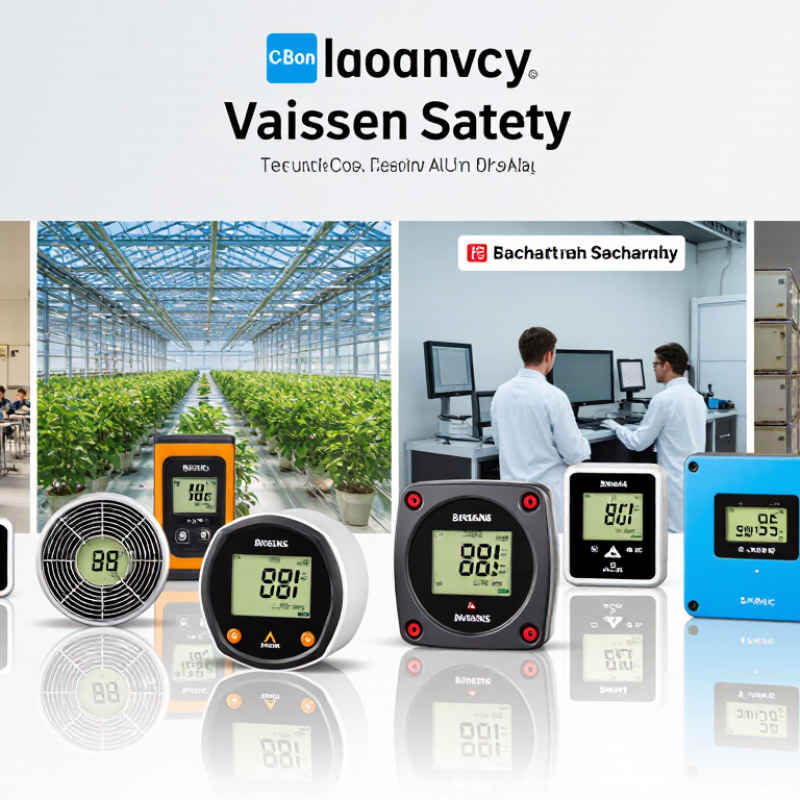
In this guide, we’re checking out top options from big names like Honeywell, Siemens, Vaisala, Senseair, Bacharach, and MSA Safety. We’ll take a look at their measurement tech, detection range, response times, calibration options, data logging capabilities, connectivity, and how easy they are to install. While non-dispersive infrared technology still gets a lot of respect for carbon dioxide monitoring, it’s really important to test these units practically. A cheap model might look tempting, but it could give you wonky readings near a warm window or in a crowded meeting room—that’s something you wanna watch out for.
Now, no product review is ever perfect. We base our comparison on manufacturer info, technical specs, testing principles focused on real-world use, and actual workplace experience. We also factor in how much maintenance is needed, if the sensors are easy to replace, the enclosures’ protection levels, and how well they play with building management systems. These things can impact your total ownership costs way more than just the sticker price. Just a heads up: it’s essential to double-check regional certifications, safety standards, and the support from the supplier before you go ahead and buy. Specifications can change, and some marketed features might not hold up in real life—ouch, but true. Being thorough here helps you avoid costly surprises later on. By going through this review, you should be able to spot options that fit different budgets, environments, and monitoring needs without much hassle.
CO₂ Safety Thresholds: OSHA 5,000 ppm TWA and NIOSH 40,000 ppm IDLH
2026 Top Carbon Dioxide Detectors for Global Buyers
Carbon dioxide monitoring starts with two very different safety numbers. OSHA sets a 5,000 ppm permissible exposure limit as an eight-hour time-weighted average. NIOSH lists 40,000 ppm as immediately dangerous to life or health. These limits are not comfort targets. A detector showing 5,000 ppm demands attention, even when workers feel normal.
Small differences matter. A busy meeting room can rise above 1,000 ppm, the indoor-air guideline commonly referenced from ASHRAE Standard 62.1. At 5,000 ppm, ventilation may be seriously inadequate. At 40,000 ppm, emergency controls and trained response are essential. Do not treat a green display as proof of safety.
For global buyers, choose detectors with NDIR sensing, visible alarms, data logging, and calibration records. Place sensors near breathing zones, but avoid supply vents, doors, and direct sunlight. OSHA sampling guidance supports time-weighted exposure assessment, while the NIOSH Pocket Guide reinforces the IDLH benchmark. Field conditions are rarely perfect. Sensors drift. Batteries fail. I would also verify alarm settings against local rules, because one universal configuration can create dangerous confidence. Test the device with documented procedures, not just a quick power-on check.
NDIR Sensor Accuracy: ±50 ppm + 5% and Automatic Baseline Calibration
For global buyers, a Carbon Dioxide Meter should offer more than a large display. NDIR sensing provides a practical method for measuring indoor carbon dioxide levels. A stated accuracy of ±50 ppm + 5% supports informed ventilation decisions. This specification should be read carefully. It combines a fixed tolerance with a percentage of the measured value.
In a busy classroom, the reading may rise from 600 ppm to 1,400 ppm within an hour. That change can reveal poor air exchange before occupants feel uncomfortable. Automatic Baseline Calibration helps the sensor adjust its reference point over time. It normally expects occasional exposure to outdoor-level air. That assumption may fail in sealed rooms or continuously occupied spaces. Users should check calibration behavior before installation.
Small details matter. Recordings should remain stable near normal outdoor concentrations. The display should react without excessive jumps. A clear maintenance guide also supports reliable field use. I would compare readings against ventilation events, not isolated numbers. This is less impressive, perhaps, but more useful. Sensor accuracy can still vary with temperature, humidity, dust, and aging. Buyers should request test conditions, response time, and calibration intervals. A strong specification is valuable, yet real-world verification remains necessary.
Measurement Ranges: 0–5,000 ppm for IAQ and 0–40,000 ppm for Safety
2026 Top Carbon Dioxide Detectors for Global Buyers
Measurement ranges determine whether a Carbon Dioxide Sensor supports indoor air quality or workplace safety. For offices, classrooms, and clinics, a 0–5,000 ppm range offers practical visibility. It can reveal rising levels during crowded meetings or after windows remain closed. Around 1,000 ppm, ventilation may deserve attention, although building conditions vary.
For confined areas, industrial rooms, and emergency planning, a 0–40,000 ppm range provides a wider safety margin. This range reaches 4% carbon dioxide, where exposure risks become serious. A suitable detector should provide clear alarms, stable readings, and a response suited to changing conditions. Placement changes everything. Mounting near an exhaust outlet can distort results, while placing it at breathing height often gives more useful data.
Experienced buyers should inspect calibration records, sensor lifespan, temperature compensation, and alarm settings. Readings can drift. Dust, humidity, and poor maintenance may also reduce confidence. A bright screen does not prove accuracy. During field checks, comparing measurements with a recently verified reference instrument can expose unexpected differences. I would also question devices that promise perfect results without explaining testing methods. Numbers need context. For global use, buyers should review local installation practices and safety requirements before deployment.
Global Compliance: EN 50543, ASHRAE 62.1, CE, UKCA, and FCC Standards
For global buyers, carbon dioxide detectors should be evaluated against both performance and market-entry requirements. EN 50543 is relevant to portable and transportable instruments measuring carbon dioxide in indoor air. Check the stated measuring range, alarm response, display resolution, and calibration method. A detector placed beside a classroom door may read differently from one mounted near a breathing zone.
ASHRAE 62.1 uses ventilation principles, but carbon dioxide is only an indirect occupancy indicator. It does not prove complete indoor air quality. Buyers should review sensor stability, sampling intervals, temperature compensation, and maintenance instructions. Field experience shows that poor placement can create misleading readings. That detail is often underestimated.
For products entering European markets, CE documentation should match the actual model and applicable directives. UK buyers should request equivalent UKCA conformity information where required. FCC compliance concerns electromagnetic emissions and interference in the United States. Ask for test reports, declarations, user manuals, and calibration records before purchase. Keep them accessible for audits.
A Dissolved Carbon Dioxide Meter belongs to liquid measurement applications and should not be confused with an indoor-air detector. Some suppliers use similar wording, which can cause procurement errors. Battery endurance, enclosure protection, and local support also deserve attention. No certificate replaces practical verification. A short on-site comparison against a calibrated reference instrument can reveal unexpected drift.
2026 Top Carbon Dioxide Detectors for Global Buyers
Global Compliance: EN 50543, ASHRAE 62.1, CE, UKCA, and FCC Standards
This chart shows widely referenced indoor-air CO₂ points rather than universal legal limits. Approximately 420 ppm represents a recent outdoor atmospheric background level; 800 ppm is commonly used as an indoor ventilation target in practice; 1,000 ppm is a frequently used screening reference; and 5,000 ppm is the OSHA 8-hour occupational exposure limit used in the United States. ASHRAE 62.1 uses ventilation-rate and indoor-air-quality procedures rather than a single universal CO₂ pass/fail threshold. EN 50543 addresses CO₂ detection and measurement equipment, while CE, UKCA, and FCC requirements concern product conformity and electromagnetic or radio compliance.
EN 50543: CO₂ measurement equipment for non-industrial premises ASHRAE 62.1: Ventilation and acceptable indoor-air-quality procedures CE / UKCA: Product conformity for applicable markets FCC: Applicable US EMC and radio requirements
Comparing 2026 Detectors: Response Time, Data Logging, Alerts, and IP Ratings
2026 Top Carbon Dioxide Detectors for Global Buyers
For global buyers, detector selection starts with response time, not a glossy screen. In occupied rooms, a reading within 30 seconds can reveal rising CO2 before discomfort spreads. Faster is not always better. Aggressive filtering may hide short spikes. During site checks, compare readings with a calibrated reference instrument. Record the delay after a controlled ventilation change. Small differences matter.
Data logging shows what one live reading cannot. Look for adjustable intervals, internal memory, time stamps, and export formats. Staff should open files without special software. A one-minute interval helps investigate classrooms and production areas. Longer intervals preserve memory during remote deployments. Check battery performance while logging. Some units claim long runtime, but alarms and wireless transmission can reduce it sharply. Test this onsite.
Alerts should be visible, audible, and configurable. Set thresholds according to the building’s ventilation plan. Verify them with a safe test source. Avoid relying on one alarm channel. IP ratings also need context. An IP54 enclosure may resist dust and splashes, but not washdown or condensation. Mounting location changes the result. Document sensor height, airflow, temperature, and maintenance dates. The method is not perfect, yet transparent records expose weak assumptions.
Best Detector Types for Homes, Schools, Offices, Agriculture, and Industry
For homes, schools, and offices, non-dispersive infrared (NDIR) detectors offer stable CO2 readings and low maintenance. Wall-mounted models help facility teams spot crowded rooms, closed windows, or weak ventilation. Portable meters are useful during classroom audits, though users may forget to recharge them. The World Health Organization’s 2021 ventilation roadmap identifies CO2 monitoring as a practical indicator of ventilation performance, not a complete indoor-air-quality test.
Schools need visible displays, audible alerts, and data logging for classrooms, gyms, and assembly halls. Offices benefit from networked sensors that compare readings across meeting rooms. ASHRAE Standard 62.1-2022 treats CO2 as a ventilation diagnostic rather than a universal safety limit. That distinction matters. A low reading does not prove clean air, because particles, moisture, and chemicals may remain.
Greenhouses often require fast-response sensors for controlled CO2 enrichment and crop management. Industrial sites may need fixed detectors, remote alarms, rugged enclosures, and scheduled calibration. Sensor placement should avoid direct vents, heaters, and breathing zones that distort readings. A Total Organic Carbon Meter measures organic carbon in water, not room CO2. They are not interchangeable. Even high-quality detectors drift, especially in dusty agricultural spaces, so maintenance records and comparison checks remain essential. An imperfect sensor can still support better decisions, if its limits are visible.
Ownership Costs: Calibration Cycles, Battery Life, Connectivity, and Warranty
For global buyers, a carbon dioxide detector’s ownership cost extends far beyond its purchase price. Calibration may be required every six to twelve months, depending on sensor type and operating conditions. Dusty rooms, high humidity, and continuous monitoring can shorten this interval. A neglected calibration creates false confidence. That is a serious weakness.
Battery life also changes with sampling frequency, screen brightness, alarms, and wireless transmission. A portable unit may last several months, while continuous connectivity can drain it within weeks. Check whether batteries are replaceable locally. Otherwise, shipping and service delays can become hidden expenses. Connectivity needs equal attention. Wi-Fi may be inexpensive indoors, but cellular models often require recurring data fees. Export buyers should verify regional network compatibility before ordering.
Tips: Request a written calibration schedule, battery estimate, replacement cost, and warranty exclusions. Ask whether calibration certificates are supplied after service. Compare the total three-year cost, not just the listed price. A longer warranty sounds valuable, but it may exclude the sensing element, battery, or accidental damage. In my experience, unclear exclusions cause more disputes than technical failure. I may still choose a slightly costlier detector when service access is reliable. The cheapest option is not always economical.
FAQS
A typical specification may state ±50 ppm plus 5% of the measured value. This combines a fixed tolerance and a percentage. Check the testing conditions carefully.
It adjusts the sensor’s reference point over time. The process usually expects occasional outdoor-level air. Sealed rooms may confuse this assumption. That limitation deserves attention.
A 0–5,000 ppm range usually fits indoor air-quality monitoring. It can show rising levels during a crowded meeting. Around 1,000 ppm may signal ventilation concerns. Building conditions still vary.
A 0–40,000 ppm range suits confined or industrial spaces. It provides broader visibility during unusual conditions. Use alarms and safety procedures together. A wider range is not automatically more accurate.
Mount it near breathing height, away from exhaust outlets. Avoid placing it beside windows, vents, or strong airflow. Record the mounting height and room conditions. Placement changes everything.
A reading within about 30 seconds can reveal rising levels promptly. However, aggressive filtering may hide brief peaks. Test the delay after opening a window. Faster is not always better.
Look for adjustable intervals, time stamps, internal memory, and common export formats. A one-minute interval can show classroom changes clearly. Longer intervals conserve memory during remote monitoring. Battery life may fall during logging and wireless transmission.
Alarms should be visible, audible, and configurable for the building plan. Verify them with a safe test source. An IP54 enclosure may resist dust and splashes, but not heavy washdown. Do not trust one alarm channel alone. My judgment may be incomplete. Testing onsite remains wiser.
Conclusion
Choosing the right Carbon Dioxide Detector in 2026 requires balancing safety, accuracy, usability, and long-term ownership costs. For indoor air quality, a 0–5,000 ppm measurement range is generally suitable, while industrial and high-risk environments may require coverage up to 40,000 ppm. Buyers should understand the OSHA 5,000 ppm time-weighted average and the NIOSH 40,000 ppm immediately dangerous level, while selecting NDIR sensors capable of approximately ±50 ppm plus 5% accuracy with automatic baseline calibration.
The best detector depends on the application, from homes, schools, and offices to agriculture and industrial facilities. Important comparison points include response time, visual or audible alerts, data logging, battery life, connectivity, and IP protection. Products intended for international use should also support relevant requirements such as EN 50543, ASHRAE 62.1, CE, UKCA, and FCC standards. Finally, buyers should evaluate calibration intervals, maintenance needs, warranty coverage, and total ownership costs before making a purchasing decision.





 Contact WhatsApp
 Contact Phone
 Contact Email