Choosing the right Free Chlorine Tester from China isn’t just about comparing prices or glancing at product photos. Water quality folks usually look at things like how accurate the readings are, how quickly it tests, its measuring range, and whether it’s easy to use every day. A good, reliable tester should give consistent free chlorine measurements whether you're checking a swimming pool, drinking water setup, or a water treatment plant. It should also come with clear instructions and keep stable readings in real-world conditions.
China has tons of manufacturers, but the quality can really vary from one place to another. Some offer digital meters that automatically adjust for temperature differences, while others might just have simple color comparison kits. The best choice really depends on what kind of testing environment you’re working with. If you’re in a lab, you might need something more precise with proper calibration records. But if you're managing a pool, a compact tester that gives quick results might be more your style. Look for things like documented quality control, user manuals, warranty support, and if replacement reagents are easy to find. Also, ask if their calibration process follows recognized standards.
Remember, no device is perfect. Trying it out in real life makes a big difference. Test the same water sample several times and compare your results to those from a trusted lab. See if the screen is still easy to read near bright pool environments, and check out how simple it is to clean the sample cell. How a supplier responds when you ask technical questions also says a lot about their reliability. A serious manufacturer should be able to explain things clearly and provide solid documentation. But don’t get dazzled by fancy specs—they can sometimes hide flaws. So, your initial shortlist might need a few adjustments after you actually test them.
This guide breaks down what to look for: core features, credibility of Chinese suppliers, ongoing costs, and performance over time. The goal? Help you pick a Free Chlorine Tester based on real evidence, not just assumptions or marketing hype.
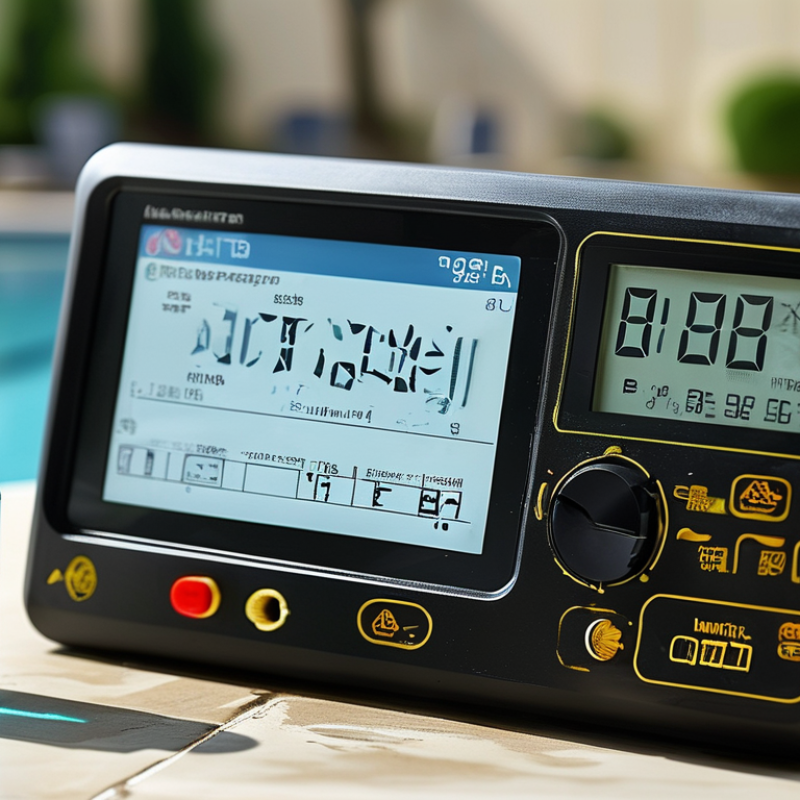
What Is a Free Chlorine Tester?
A free chlorine tester is a device used to measure chlorine remaining in water after disinfection.It usually detects hypochlorous acid and hypochlorite ions. Most portable testers use the DPD colorimetric method. The reagent turns pink. The instrument then estimates chlorine concentration, usually in milligrams per liter. This is different from Total Chlorine, which also includes combined chlorine compounds.That distinction matters.
The World Health Organization’s Guidelines for Drinking-water Quality recommend at least 0.2 mg/L of free chlorine at the point of delivery. Its guidance also discusses 0.5 mg/L after a 30-minute contact period under suitable conditions. The U.S. EPA lists 4.0 mg/L as chlorine’s maximum residual disinfectant level in public drinking water. These figures provide useful control points, not universal targets. A reliable tester should resolve low readings near 0.2 mg/L. It should also manage samples above its stated range.
When choosing a free chlorine tester from China, examine calibration records, reagent traceability, and method validation. Ask whether testing follows Standard Methods 4500-Cl G. Field technicians should control sample temperature, pH, turbidity, and reading time. Expired reagents can produce misleading results. So can sunlight and dirty cuvettes. A low purchase price may hide weak quality control. Calling one model “best” is premature without independent comparison. No tester is perfect. Record unusual results and repeat questionable tests.
How Do Free Chlorine Testers from China Work?
A Free Chlorine Tester from China usually works through color comparison or electrochemical sensing. In a colorimetric Free Chlorine Test, a measured water sample receives a reagent, commonly DPD. Free chlorine oxidizes the reagent and produces a pink color. Stronger color indicates a higher concentration. A photometer measures light absorption more consistently than human eyesight. This helps in a dim pool room. Small sampling errors still matter. Wet cuvettes can distort readings.
Electrochemical testers use electrodes to measure the current created by chlorine reactions in water. Some models adjust the reading for temperature or pH, while simpler units do not. During routine checks, collect water below the surface and test it quickly. Sunlight and delays can reduce chlorine, producing a falsely low result. pH also affects chlorine activity, so concentration alone does not show complete disinfection performance. Calibration with a suitable standard improves confidence. Reagents need cool, dry storage and careful handling. Not every low-cost unit is consistent. I would test the same sample twice and compare it with an independent laboratory method when accuracy matters. A bright display can still hide a weak measurement process.
Which Types of Free Chlorine Testers Are Available?
When choosing the best free chlorine tester from China, start with the available testing types. Test strips are affordable, lightweight, and useful for quick checks in pools or small water systems. Their color blocks can be difficult to judge under weak lighting. DPD tablet or powder kits provide clearer color reactions and usually offer better accuracy. They require careful sample filling and clean testing containers. Digital photometers measure the color reaction electronically, reducing visual guesswork. They suit technicians who need repeatable records. Amperometric testers measure chlorine through an electrical sensor and can support frequent monitoring, although calibration and maintenance are essential.
Each type has a practical place. In my experience, strips work well for routine screening, while DPD kits are more dependable for confirming unusual readings. A photometer may be the better choice for laboratories, property managers, or water treatment teams. Sensor-based meters can save time during repeated tests, but they are not maintenance-free. Temperature, pH, dirty cells, and expired reagents can affect results. No tester is perfect.
Tips: Collect the sample away from chemical feeders and test it quickly. Rinse the vial with sample water before measurement. Keep reagents sealed, dry, and within their stated shelf life. Compare digital results with a DPD test occasionally. This simple check may reveal calibration drift. Also, record the date, water temperature, and result. Small details matter.
What Is the Best Free Chlorine Tester from China?
Typical measurement ranges of commonly available free chlorine tester types
DPD test strips are simple and low-cost, while DPD comparators and digital photometers generally provide better readability for routine testing. Amperometric testers are suitable for continuous monitoring and wider measurement ranges. Actual ranges vary by test procedure and instrument configuration.
How to Compare Accuracy, Range, and Testing Methods
Choosing the best free chlorine tester from China requires more than comparing prices. In field checks, accuracy depends on the method, sample condition, and operator habits. A DPD colorimeter measures a visible color change and suits routine pool or drinking-water checks. An amperometric Free Chlorine Probe measures current continuously, which helps with dosing control. Test strips are quick, but their color blocks can be difficult to read under weak lighting. Not always.
Compare the stated range with your actual target. A device designed for 0–5 mg/L may be unsuitable for industrial water above that level. Check resolution, repeatability, calibration instructions, and stated tolerance. Ask whether results are reported as chlorine or Cl2 equivalent. pH and temperature can shift readings, especially in reactive samples. A reliable tester should provide clear sampling steps and a stable optical chamber or probe. I prefer duplicate tests from one sample. Repeat twice. Similar results build confidence.
Before buying, request independent test data rather than relying only on factory claims. Check reagent shelf life, probe replacement costs, battery protection, and data logging. Rinse the probe with clean water after every test. Small residue can distort the next reading. I once trusted a single result because it looked reasonable, but a second test exposed poor mixing. That mistake changed my procedure. No tester removes human error. The practical choice balances accuracy, range, testing method, maintenance, and support for the water you actually measure.
What Features Matter in a Reliable Chinese Tester?
A reliable Free Chlorine Meter should make routine water checks simple, not confusing. In practical use, measurement range matters first. A pool tester may need 0–5 ppm, while commercial water systems often require a wider range. Check the stated accuracy, resolution, and response time before buying.
Look for automatic calibration, clear instructions, and stable readings after repeated tests. A bright display helps in utility rooms with poor lighting. Waterproof protection is useful, but “water-resistant” does not mean damage-proof. The sensor or test chamber should be easy to clean. Replaceable batteries and a visible low-battery warning can prevent missed readings. Some details are easy to overlook.
Tips: Test with clean sampling containers. Rinse them twice before collecting water. Keep reagents sealed and check their expiry dates. Compare a new tester with a reference method occasionally, especially after transport or long storage. Record the date, water temperature, result, and calibration status. This small log can reveal drifting measurements.
Chinese manufacturers offer many capable testers, but specifications need careful reading. Ask for calibration procedures, quality-control records, and material information for wetted parts. Independent testing evidence is more useful than vague claims. Also check whether replacement sensors and reagents are realistically available. I would not choose the cheapest unit automatically. A low purchase price becomes costly when readings vary, instructions are unclear, or support disappears after delivery.
What Is the Best Free Chlorine Tester from China? - What Features Matter in a Reliable Chinese Tester?
| Tester Type | Testing Principle | Typical Free Chlorine Range | Typical Resolution | Typical Test Time | Relative Accuracy | Best Application |
| DPD Color Comparator | A DPD reagent produces a pink color that is visually compared with a calibrated color scale. | Approximately 0–3 mg/L, depending on the comparator scale. | Usually 0.1–0.5 mg/L | About 1–3 minutes | Good for routine checks; affected by user color judgment. | Pools, spas, drinking-water checks, and field inspections. |
| Digital DPD Photometer | A photometric sensor measures the color intensity created by a DPD reagent. | Commonly 0–5 mg/L; some models use wider ranges. | Typically 0.01–0.1 mg/L | About 1–2 minutes | Very good when the instrument is calibrated and reagents are fresh. | Water-treatment monitoring, laboratories, commercial pools, and quality control. |
| DPD Liquid Reagent Kit | Liquid DPD reagent reacts with free chlorine and is evaluated by color comparison or titration. | Approximately 0–5 mg/L for color comparison kits. | Usually 0.1–0.5 mg/L | About 2–5 minutes | Good when the procedure and sample volume are controlled. | Routine maintenance where low purchase cost is important. |
| Free Chlorine Test Strips | A reagent pad changes color after contact with the water sample. | Commonly 0–10 mg/L, depending on the strip scale. | Usually 0.5–1 mg/L | About 15–60 seconds | Acceptable for screening; less precise than DPD photometry. | Fast household checks and preliminary field screening. |
Key Features of a Reliable Chinese Free Chlorine Tester
| Feature | Recommended Requirement | Why It Matters | Evaluation Priority |
| Measurement Method | DPD-based colorimetric measurement for free chlorine. | DPD is a widely used method for determining free chlorine in water. | Essential |
| Measurement Range | A range suitable for the intended water, commonly 0–5 mg/L for pool and drinking-water checks. | A suitable range improves resolution and reduces out-of-range results. | Essential |
| Resolution and Accuracy | Preferably 0.01–0.1 mg/L resolution with a published accuracy specification. | Resolution shows display detail, while accuracy indicates closeness to the reference value. | Essential |
| Calibration | Zero calibration with a blank sample and a documented calibration procedure. | Calibration compensates for optical variation, sample cells, and measurement conditions. | Essential |
| Reagent Quality | Clearly identified DPD reagents with lot information, storage instructions, and an expiration date. | Expired or poorly stored reagents can produce unreliable chlorine readings. | Essential |
| Sample Cell Design | Optically clear, scratch-resistant cells with a consistent fill mark and protective cap. | Fingerprints, scratches, bubbles, and inconsistent sample volume can affect optical readings. | High |
| pH Compensation | A stated operating pH range, with pH control or correction guidance when required. | DPD chlorine measurements can be influenced by sample pH and water chemistry. | High |
| Interference Control | Instructions covering bromine, manganese, oxidizing agents, turbidity, and combined chlorine interference. | Interfering substances may cause results that are higher or lower than the actual free chlorine level. | High |
| Water and Dust Protection | A clearly stated ingress-protection rating appropriate for field use. | Protection helps prevent damage from splashes, dust, and routine handling. | High |
| Documentation and Support | English instructions, test procedure, troubleshooting guide, spare-cell information, and reagent availability. | Clear documentation is necessary for repeatable testing and long-term operation. | High |
| Compliance Information | Traceable calibration information, relevant test-method references, and applicable electrical safety documentation. | Supporting documentation makes it easier to verify suitability for professional or regulated use. | Important |
Note: Performance ranges are typical industry values and vary by instrument design, reagent formulation, sample conditions, calibration status, and manufacturer specifications.
How to Choose the Best Free Chlorine Tester for Your Needs
Choosing the best free chlorine tester depends on your water, workflow, and required accuracy.
The World Health Organization’s Guidelines for Drinking-water Quality reports that residual chlorine should commonly remain around 0.2–0.5 mg/L at the point of use. Therefore, a tester should measure this range clearly, not only display a large maximum value. For pools, cooling systems, or process water, select a wider range and confirm the expected concentration before purchasing.
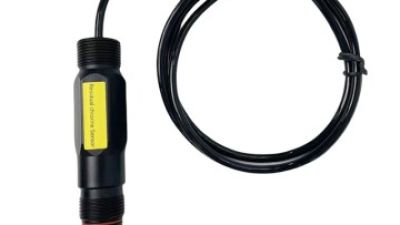
A Free Chlorine Sensor suits continuous monitoring, especially where readings must be recorded automatically. DPD colorimetric testers can be practical for periodic checks, and US EPA Method 334.0 recognizes DPD testing for field residual disinfectant measurements.
Check resolution, calibration stability, temperature compensation, sample volume, and response time. A reading that appears quickly is not always a reliable reading.
Look for IP-rated protection, replaceable parts, clear instructions, and calibration records. ISO 7393-2 also provides a recognized framework for determining free chlorine in water. Ask whether the supplier tests instruments against reference solutions, rather than relying only on factory claims.
My practical concern is simple: low-cost meters may perform well initially, then drift after frequent testing. I would compare three repeated readings from the same sample, inspect the variation, and keep a manual check during the first month. Small inconsistencies deserve attention.
High-Precision Digital Residual Chlorine Sensors: Insights from WHO/UNICEF JMP and EPA Water Quality Reports
Reliable residual chlorine measurement is central to the safe management of drinking-water systems. Reports and monitoring frameworks associated with the WHO/UNICEF Joint Monitoring Programme (JMP) emphasize the importance of water safety, service reliability, and effective treatment throughout the supply chain. EPA water quality reports likewise highlight the need for accurate process control and compliance monitoring. A high-precision digital residual chlorine sensor can support these objectives by measuring free chlorine, including hypochlorous acid (HOCl) and hypochlorite (OCl⁻), across changing water conditions.
Manufactured in China, this sensor uses a three-electrode constant-potential design to provide stable measurement from 0 to 20.00 ppm, with resolution down to 0.001 ppm. Integrated pH compensation helps reduce drift and improve data consistency in drinking-water facilities, industrial effluent treatment, and aquaculture systems. Its IP68-rated housing and G3/4 thread options support both flow-through and submerged installation, while an optional self-cleaning electrode cover can reduce fouling and routine maintenance.
For modern water infrastructure, digital connectivity is equally important. Modbus RTU communication over RS485 enables direct integration with SCADA platforms, IoT gateways, and industrial control systems for continuous monitoring and alarm management. Automatic calibration commands simplify commissioning and scheduled maintenance, allowing suppliers, factories, and water operators to obtain timely residual chlorine data for treatment adjustment, process verification, and operational recordkeeping.
FAQS
It measures chlorine remaining after water disinfection. Most devices detect hypochlorous acid and hypochlorite ions. Results usually appear in milligrams per liter. This differs from total chlorine, which includes combined chlorine compounds.
Common options include test strips, DPD kits, digital photometers, and amperometric meters. Strips are lightweight and useful for quick screening. DPD kits usually provide clearer color reactions. Photometers reduce visual judgment. Sensor meters support frequent monitoring but require maintenance.
Match the range with your actual water conditions. A 0–5 mg/L tester may not suit higher industrial readings. Check resolution, repeatability, and stated tolerance. The tester should resolve readings near 0.2 mg/L when low levels matter.
Compare the testing method, calibration records, and independent test data. Ask whether results represent chlorine concentration or Cl₂ equivalent. Sample temperature, pH, turbidity, and mixing can change results. One reasonable-looking result is not enough. Repeat twice.
Collect water away from chemical feeders. Test the sample quickly after collection. Rinse the vial with sample water before testing. Fill it carefully and avoid trapped bubbles. Small details matter.
Expired reagents may weaken the color reaction. Sunlight can affect exposed samples and reagents. Dirty cuvettes or probes may carry residue into the next test. Poor mixing can also create unstable results. Not always obvious.
Keep reagents sealed, dry, and within their shelf life. Rinse probes and testing containers after use. Store the instrument according to its temperature requirements. Review calibration regularly and record unusual results. Maintenance is easy to underestimate.
Some drinking-water guidance uses 0.2 mg/L at delivery as a control point. Another reference discusses 0.5 mg/L after thirty minutes of contact under suitable conditions. A public-water limit may be listed near 4.0 mg/L. These figures are not universal targets. Water conditions differ.
Test the same sample twice and compare the readings. Occasionally compare digital results with a DPD test. Record the date, temperature, method, and result. Large differences deserve investigation. I once trusted a single result. That was a mistake.
Conclusion
A Free Chlorine Tester is a practical tool used to measure the amount of active chlorine in water, helping users maintain safe and effective disinfection levels. Testers from China are available in several formats, including color-comparison strips, liquid reagent kits, digital meters, and portable photometers. Most devices work by reacting a water sample with a testing reagent and then interpreting the color change or electronic reading. Each method offers different advantages in convenience, speed, precision, and cost.
When comparing testers, users should consider measurement range, accuracy, resolution, testing time, calibration requirements, and resistance to environmental conditions. A reliable Chinese tester should also provide clear instructions, stable performance, easy cleaning, and suitable operation for its intended water type, such as drinking water, pools, industrial systems, or aquaculture. The best choice depends on testing frequency, required precision, budget, portability, and whether quick field checks or detailed monitoring is needed.





 Contact WhatsApp
 Contact Phone
 Contact Email