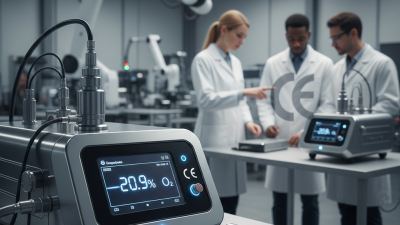
Picking out the right Trace Oxygen Analyzer isn’t just about looking at detection limits on some datasheet. You’ve gotta make sure it actually fits your specific setup—things like the type of gas, process pressure, humidity, temperature, and the measurement range you need. For example, a reading in the low parts per billion (ppb) is a whole different ballgame compared to measuring near 1%. Sensor tech really matters here—zirconia, electrochemical, and laser-based analyzers each respond differently to things like dirt, pressure bumps, or sample flow issues. Tiny details can seriously impact your real results.
So, it pays to pay attention to response times, accuracy, repeatability, calibration stability, and alarm functions. Don’t forget to ask if the analyzer supports traceable calibration gases and whether it keeps solid maintenance records. And sample conditioning? It’s just as important. A wet sample line, a leaky fitting, or a clogged filter can fool you into thinking the sensor is off when it’s really just a setup problem. Before firing up the system, technicians should double-check tubing lengths, flow control, and material compatibility. Keeping that sample path clean is key.
From real-world experience, I’ve learned that the cheapest option upfront doesn’t always save you money in the long run. Sensors that need frequent replacing, tricky calibration procedures, or confusing software can add up over time. A good supplier will be upfront about these limits, provide solid technical documentation, and support you with verification after installation. Looking at independent test data and documented quality procedures helps build confidence, too. But let’s be honest—no guide can eliminate every doubt. Processes change, sometimes unexpectedly. So, a smart buyer challenges assumptions, compares measurements, and reviews past process data before making a choice. Ultimately, the best Trace Oxygen Analyzer isn’t necessarily the most sensitive model; it’s the one that gives reliable, consistent results in real-world conditions.
Define the Measurement Target: Percent, ppm, or ppb Oxygen Levels
How to Choose a Trace Oxygen Analyzer?
Choosing a trace oxygen analyzer starts with defining the measurement target: percent, ppm, or ppb oxygen. Percent measurement fits oxygen-rich streams, ambient air, and combustion-related applications. Ppm measurement suits inert gases, sealed chambers, and purge systems. Ppb measurement requires much tighter control and cleaner sampling. One percent equals 10,000 ppm. One ppm equals 1,000 ppb. That choice matters.
In practical commissioning work, I have seen instruments selected by maximum range alone. This often creates poor resolution near the real operating point. A better approach compares the expected oxygen level with accuracy, repeatability, and detection limit. If the process normally contains 8 ppm oxygen, a 0–10,000 ppm instrument may provide weak control. A narrower range could reveal small changes more clearly. Small leaks matter.
Sampling conditions can change the result before gas reaches the sensor. Ambient air entering through loose fittings may raise a ppb reading dramatically. Moisture, pressure changes, long tubing, and unsuitable materials can also delay or distort measurement. Keep the sample path short and verify its leak tightness. Calibration gas should match the working range whenever possible.
I once treated a stable reading as reliable, then found condensation inside the line. The analyzer was not the only problem. Ask whether the required result is percent, ppm, or ppb, and whether the entire sampling system can support that level.
Match Sensor Technology to Ranges from 0.1 ppb to 100% O₂
How to Choose a Trace Oxygen Analyzer?
A range from 0.1 ppb to 100% O₂ cannot be covered reliably by one sensor design. At 0.1 ppb, tiny leaks, moisture, tubing materials, and room-air exposure can distort results. Specialized optical or coulometric technologies may suit ultra-trace work. They require careful sample handling and stable calibration.
For ppm and low-percent measurements, electrochemical sensors can provide practical performance with simple operation. Their response depends on temperature, pressure, and sensor aging. Paramagnetic systems are useful for clean, percent-level oxygen streams and can offer fast, repeatable readings. They are less suitable when oxygen falls into the deepest trace range. Zirconia sensors fit higher concentrations and process applications, especially where temperatures are elevated. They need the correct reference gas and should not be treated as universal trace instruments.
At the upper end, measuring near 100% O₂ demands compatible wetted materials, controlled flow, and a sensor rated for oxygen-rich service. A reading can look stable while the sample line is leaking. That mistake is easy to miss. Field checks should compare the analyzer with certified reference gases across the intended range, not only at one convenient point. Moisture removal may improve trace accuracy, but excessive drying can change the sample itself. The best choice matches the real concentration, pressure, humidity, response time, and maintenance conditions. Range alone is not enough.
Compare Accuracy, Resolution, and Drift Against ±1% Full-Scale Claims
How to Choose a Trace Oxygen Analyzer?
A ±1% full-scale claim can sound impressive, but its meaning depends on the measurement range. On a 0–1,000 ppm range, ±1% full scale equals ±10 ppm. That is not ±1% of the displayed reading. A 100 ppm result could therefore carry a substantial relative error. Always request the accuracy specification for your intended range, not the most attractive number on the datasheet.
Resolution is different. It describes the smallest visible change, not the smallest trustworthy change. An analyzer showing 0.1 ppm may not reliably distinguish changes below several ppm. Check repeatability, noise, and response time during a practical test. Watch the reading after switching from nitrogen to a controlled oxygen mixture. Slow settling can hide real process changes.
Drift deserves equal attention. Temperature swings, moisture, leaks, and sensor aging can move the baseline during a long production shift. In field checks, a stable zero before testing is useful, but it does not prove stability overnight. Ask for drift data over time and under realistic sample conditions. I have seen instruments perform well in a clean laboratory, then wander when sample tubing became damp. That detail is easy to miss. A stronger selection compares accuracy, resolution, drift, calibration intervals, and actual operating conditions together. The ±1% claim is only one piece.
Assess Pressure, Flow, Moisture, and Interfering-Gas Conditions
How to Choose a Trace Oxygen Analyzer?
Pressure, flow, moisture, and interfering gases strongly affect trace Oxygen Measurements. Start by checking the actual sample pressure, not the pressure shown on a general process gauge. Low pressure may reduce response speed, while excessive pressure can damage the sensor or distort flow. Flow also matters. Too little flow causes delayed readings. Too much flow may cool the cell or carry contaminants into the analyzer. A stable regulator and a short, clean sample line usually improve repeatability.
Moisture deserves close attention. Water can condense inside tubing, especially when warm process gas enters a cooler sampling panel. Use suitable filters, heated lines, or a moisture removal stage when required. However, drying the sample too aggressively may change the gas composition. That trade-off is easy to miss.
Tips: List every gas in the sample before selecting the analyzer. Some gases react with sensors or create false oxygen readings. Confirm compatibility, pressure limits, flow range, and detection response using real operating conditions. Test the sampling system for leaks. Small leaks can introduce room air and produce surprisingly high readings. I have seen a precise analyzer report the wrong result because of one loose fitting. A perfect specification sheet cannot correct poor sample handling. Recheck calibration after installation, because field conditions often differ from laboratory assumptions.
Evaluate T90 Response Times, Including Sub-15-Second Performance
How to Choose a Trace Oxygen Analyzer?
T90 response time measures how long an analyzer takes to reach 90% of a new oxygen reading after a concentration step. A sub-15-second result can improve process control, but the number needs context. Ask whether the test used dry gas, short tubing, stable pressure, and a high flow rate. Those conditions may not match your installation.
During evaluation, connect the analyzer through the same tubing length and fittings used in operation. Long lines, large internal volumes, leaks, moisture, and reactive surfaces can delay the signal. Test both rising and falling oxygen changes. Record the starting concentration, final concentration, flow, pressure, temperature, and stabilization time. Repeat each test.
Test it yourself.
A fast sensor can still produce slow system results. For example, a 10-second instrument may respond slowly when placed several meters from the sampling point. Data logging helps reveal overshoot, noise, and gradual drift that a single displayed value can hide. Ask for traceable calibration records and a documented response-time method. Independent verification is valuable when safety margins or product quality depend on rapid detection. I would not select an analyzer from a headline specification alone. My early tests sometimes expose overlooked sample-line volume. That is useful, even when inconvenient. Evaluate maintenance access, alarm behavior, and performance near the lowest measurement range, where trace oxygen readings can become less stable.
How to Choose a Trace Oxygen Analyzer?
Evaluate T90 response times, including sub-15-second performance
How to read the chart: T90 is the time required for the analyzer reading to reach 90% of the final value after a step change in oxygen concentration. Lower values indicate faster response. A sub-15-second T90 can be important when rapid process changes, leak detection, or short sampling cycles must be identified quickly. Compare analyzers under the same gas flow, pressure, tubing length, sample conditioning, and concentration-step conditions.
Verify Calibration with Certified Gas and ISO/IEC 17025 Traceability
Choosing a trace oxygen analyzer is not only a question of detection range or display resolution. The stronger test is whether its calibration can be verified with certified gas. In a working laboratory, I connect the analyzer to a regulator, purge the line, and record the reading after stabilization. Small details matter. Leaks, wet tubing, and rushed purging can distort results before measurement begins. A low oxygen reading is not automatically a good reading.
Ask for a current certificate for the calibration gas, including concentration, uncertainty, batch identification, and expiry date. The certificate should show traceability to recognized national or international standards. ISO/IEC 17025 accreditation adds confidence because the calibration laboratory has demonstrated technical competence and controlled procedures. Still, accreditation does not remove operator responsibility. The gas must match the analyzer’s range and application. A mismatch can create false confidence.
During acceptance testing, compare the analyzer response with the certified value. Document temperature, pressure, flow, and stabilization time. Repeat the check at more than one point when practical. Keep the records. I have seen teams focus on a perfect first reading, then overlook slow drift during a long run. That is a useful warning. Schedule verification based on risk, usage, and history, not habit alone. If results disagree, investigate the gas path, fittings, sensor condition, and certificate before adjusting calibration.
Select Alarms, Outputs, and Maintenance for Continuous Monitoring
Choosing a trace oxygen analyzer involves more than comparing measurement ranges. Continuous monitoring depends on clear alarms, dependable outputs, and practical maintenance access.
Set high, low, and sensor-failure alarms according to the process risk. A low-reading alarm may protect an inert environment, while a high-reading alarm can warn of air intrusion. Include calibration-due and sample-flow alarms when possible. They reveal problems before readings become misleading. Keep alarm delays short enough to protect the process, but long enough to ignore brief fluctuations. This balance is easy to misjudge.
Check how the analyzer communicates with your control system. A 4–20 mA output supports common industrial equipment, while digital communication can provide diagnostic details and recorded values. Relay outputs are useful for local warning lights or shutdown controls. Confirm signal isolation, cable length, and failure behavior before installation. A frozen output is dangerous. The system should indicate power loss or sensor failure clearly.
Maintenance should fit the working environment. Operators need easy access to filters, sample lines, and calibration connections. Moisture, dust, and restricted flow can distort oxygen readings, even when the sensor appears healthy. Schedule calibration with a certified reference gas and record every adjustment. In field commissioning, neglected tubing has caused more confusion than expected. No plan is perfect. Review alarm history, compare readings with independent checks, and revise service intervals when real conditions disagree with the manual.
FAQS
: It depends on the selected measurement range. On a 0–1,000 ppm range, ±1% full scale equals ±10 ppm. A 100 ppm reading could therefore have substantial relative error. Ask for accuracy across your intended range. The headline number may mislead.
No. Resolution shows the smallest visible change. It does not prove that change is trustworthy. A display showing 0.1 ppm may not distinguish changes below several ppm. Check repeatability, noise, and response time during testing.
Switch from nitrogen to a controlled oxygen mixture during a practical test. Watch how quickly the reading settles. Slow response can hide genuine process changes. A delayed result is still a problem.
Temperature changes, moisture, leaks, and sensor aging can move the baseline. A stable zero before testing does not prove overnight stability. Request drift data over time and under realistic sample conditions. Laboratory stability may not survive a damp sample line.
Measure the actual sample pressure near the analyzer. Low pressure can slow response. Excessive pressure may damage the sensor or distort flow. Too little flow delays readings. Too much flow can cool the measurement cell.
Warm process gas can condense inside cooler tubing. Water may shift readings or affect sensor behavior. Use suitable filters, heated lines, or moisture removal when necessary. Over-drying can also change gas composition. That trade-off deserves a real test.
Yes. Some gases react with sensors or create false oxygen signals. List every gas in the sample before choosing an analyzer. Confirm compatibility under actual pressure, flow, and moisture conditions. A clean laboratory mixture may hide field problems.
Small leaks can draw room air into the sample line. One loose fitting may produce surprisingly high readings. Use a short, clean line where practical. Test the complete sampling system for leaks. Do not blame the analyzer too quickly.
Recheck calibration after installation. Field conditions often differ from laboratory assumptions. Compare accuracy, resolution, drift, calibration intervals, and sample conditions together. I would not select equipment from one specification alone. That decision can be wrong.
Conclusion
Choosing the right Trace Oxygen Analyzer begins with clearly defining the oxygen concentration to be measured, whether expressed as percent, ppm, or ppb. The analyzer’s sensor technology should match the expected range, from ultra-low 0.1 ppb levels to oxygen-rich environments approaching 100% O₂. When comparing models, consider accuracy, resolution, and long-term drift rather than relying only on claims such as ±1% of full scale. Operating conditions are equally important, including pressure, sample flow, moisture, temperature, and potentially interfering gases.
For continuous monitoring, evaluate response performance through the T90 specification, especially when results are needed in under 15 seconds. Calibration should use certified reference gas with clear ISO/IEC 17025 traceability to support dependable measurements. Finally, review alarm functions, communication outputs, data logging, maintenance requirements, and sensor replacement procedures. A well-selected analyzer should provide stable readings, practical operation, and reliable performance throughout the intended application.





 Contact WhatsApp
 Contact Phone
 Contact Email