





- Multi-parameter Water Analyzer
- Single-Parameter Water Aalyzer
- DO Sensor
- Trace DO Sensor
- CO₂ Sensor
- COD Sensor
- EC TDS Sensor
- Salinity EC TDS Sensor
- TSS Sensor
- Turbidity Sensor
- PH Sensor
- ORP
- Ion Selective Sensor
- Ammonia Nitrogen Sensor
- Oil in Water Sensor
- Blue-Green Algae Sensor
- Chlorophyll Sensor
- Residual Chlorine Sensor
- Marine Current Sensor


0102030405


High-Precision ORP Meter Water Quality Sensor - Digital Electrode Probe from China Suppliers & Factory
Product Parameters
| Product Name | ORP sensor |
| Model | LMS-ORP100 |
| Measurement method | Lonic electrode |
| Range | ±1000.0mV |
| Accuracy | 0.1mV |
| Power | 9-24VDC (Recommend 12 VDC) |
| Voltage | 8~24 VDC (55mA/ 12V) |
| Material | Polymer Plastic |
| Size | 31mm*140mm |
| Output | RS-485, MODBUS protocol |
Product Features
①
High-Accuracy ORP Measurement
Employs an advanced ionic electrode method to deliver precise and stable ORP readings up to ±1000.0 mV with a resolution of 0.1 mV.
②
Robust and Compact Design
Constructed with polymer plastic and a flat bubble structure, the sensor is durable, easy to clean, and resistant to damage.
③
Temperature Compensation Support
Allows both automatic and manual temperature compensation for improved accuracy under varying environmental conditions.
④
Modbus RTU Communication
Integrated RS485 interface supports the Modbus RTU protocol, enabling seamless integration with data loggers and control systems.
⑤
Anti-Interference and Stable Performance
Features an isolated power supply design that ensures data stability and strong anti-interference capability in noisy electrical environments.


Applications

Industrial Wastewater Treatment
In chemical, electroplating, or printing and dyeing industries, the sensor monitors ORP during wastewater oxidation/reduction processes (e.g., removing heavy metals or organic pollutants). It helps operators confirm whether the reaction is complete (e.g., sufficient oxidant dosage) and ensures treated wastewater meets discharge standards, reducing environmental pollution.
Aquaculture Water Quality Management
In fish, shrimp, or shellfish farms (especially recirculating aquaculture systems), ORP reflects the level of organic matter and dissolved oxygen in water. Low ORP often indicates poor water quality and high disease risk. The sensor provides real-time data, allowing farmers to adjust aeration or add microbial agents timely, maintaining a healthy aquatic environment and improving breeding survival rates.
Environmental Water Quality Monitoring
For surface water (rivers, lakes, reservoirs) and groundwater, the sensor measures ORP to assess ecological health and pollution status. For example, abnormal ORP fluctuations may indicate sewage inflow; long-term data tracking can also evaluate the effectiveness of ecological restoration projects (e.g., lake eutrophication control), providing support for environmental protection departments.
Drinking Water Safety Supervision
In water treatment plants, the sensor is used in raw water pretreatment, disinfection (chlorine or ozone disinfection), and finished water storage. It ensures disinfection is thorough (sufficient oxidation to inactivate pathogens) while avoiding excessive disinfectant residues (which affect taste or produce harmful by-products). It also supports real-time monitoring of tap water pipelines, safeguarding end-user drinking water safety.
Laboratory Scientific Research
In environmental science, aquatic ecology, or water chemistry laboratories, the sensor provides high-precision ORP data for experiments. For example, it can analyze the oxidation behavior of pollutants, study the relationship between temperature/pH and ORP, or verify new water treatment technologies—supporting the development of scientific theories and practical applications.
Swimming Pool & Recreational Water Maintenance
In public swimming pools, water parks, or spas, ORP (typically 650-750mV) is a key indicator of disinfection effectiveness. The sensor monitors ORP continuously, enabling automatic adjustment of chlorine dosage. This reduces manual monitoring efforts and prevents bacterial growth (e.g., Legionella), ensuring a safe and hygienic water environment for users.


Digital RS485 water quality sensors technical data
| Digital RS485 Water Quality Sensors Technical Data | ||||||
|---|---|---|---|---|---|---|
| No. | Picture | Product Name | Model | Range | Accuracy | Resolution |
| 1 |  |
DO sensor | LMS-DO10B | 0-20mg/L, 0-60℃ | ±0.1-0.3mg/L | 0.01mg/L |
| 2 |  |
DO sensor | LMS-DO10C | 0-20mg/L, 0-60℃ | ±0.3mg/L | 0.01mg/l |
| 3 |  |
Trace DO sensor | LMS-TDO100 | 0-2000ppb, 0-50℃ | ±1ppb | 1ppb |
| 4 |  |
PH sensor | LMS-PH100 | 0-14pH | ±0.02pH | 0.01pH |
| 5 | |
ORP sensor | LMS-ORP100 | ±1000.0 mV | ±0.2 mV | 0.1mV |
| 6 |  |
EC/TDS sensor | LMS-TDS102 | CT: 0-9999uS/cm; 0-100mS/cm; TDS: 0-10000ppm |
±2.5%FS | 1uS/cm, 0.01mS/cm 1ppm |
| 7 |  |
Salinity/EC/TDS sensor | LMS-SAL104 | Conductivity: 0.1-500 mS/cm TDS:0-60000ppm Salinity: 0-500.00ppt |
±1.5%FS | 1uS/cm, 0.01mS/cm 1ppm, 0.01ppt |
| 8 |  |
COD sensor | LMS-COD100 | COD:0.1-1500mg/L TOC:0.1-750mg/L BOD:0.1-900mg/L Turbidity: 0.1-4000NTU Temperature range: 0-50 ℃ |
±5% equiv.KHP Temperature: ± 0.5 ℃ |
0.01mg/L equiv.KHP |
| 9 |  |
TSS sensor | LMS-TSS100 | 0-50000mg/L/ 0-120000mg/L | ±10%FS or 10 mg/L | 0.1mg/L or 1mg/L |
| 10 |  |
Turbidity sensor | LMS-TUR10L | 0-100NTU | ±10%FS or 0.3 NTU | 0.01NTU |
| 11 | |
Turbidity sensor | LMS-TUR10H | 0-3000NTU | ±10%FS or 0.3 NTU | 0.01NTU |
| 12 |  |
CO2 sensor | LMS-CO2100 | 2000PPM/10000PPM/50000PPM | ±5%FS | 1ppm |
| 13 |  |
Ammonia Nitrogen sensor | LMS-NH4100 | 0-1000 mg/L | ±5%FS | - |
| 14 | |
Ion Selective sensor | LMS-ION100 | 0-1000 mg/L | ±5%FS | - |
| 15 | |
Oil in Water sensor | LMS-OIL100 | 0-50 mg/L ; 0-5 mg/L | ±3%FS | 0.01ppm |
| 16 | |
Chlorophyll sensor | LMS-CHL100 | 0-500ug/L | ±3%FS | 0.1ug/L |
| 17 | |
Blue-Green Algae sensor | LMS-BGA100 | 0-2000,000 cells/ml | ±3%FS | - |
| 18 |  |
Residual Chlorine sensor | LMS-HCLO100 | 0 - 20.00 ppm | ±5%FS | 0.001 / 0.01ppm |
| 19 |  |
Marine Current sensor | LMS-Current100 | Temperature:-3℃ - 45℃ Velocity of flow:0-500 cm/s Flow direction:0-359.9° |
±0.05℃ ±1 cm/s or ±2% ±2° |
Temperature: 0.001℃ Velocity of flow:0.1 cm/s Flow direction:0.1° |
| Water Quality Analyzer Equipment | ||||||
| No. | Picture | Product Name | Model | Size | Power | Display Output |
| 20 |  |
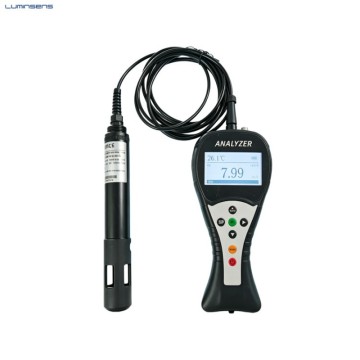
Protable DO Analyzer | LMS-PA100 | 100mm*204mm | < 0.5 W Power supply 7.5V, 5 batteries | LCD display screen |
| 21 |  |
Multi-parameter Protable Water Analyzer | LMS-PA100P | 220mm*120mm*100mm | Rechargeable lithium battery with 220v to dc charging adapter | LCD display screen |
| 22 |  |
Multi-parameter Touch-screen Online Analyzer | LMS-OA200T | 180mmx230mmx100mm | AC power supply: 220 VAC | 7-inch touch screen |
Frequently Asked Questions
Q
What is the measurement range and accuracy of the LMS-ORP100 ORP sensor?
The LMS-ORP100 ORP sensor features a measurement range of ±1000.0 mV with an accuracy resolution of 0.1 mV, utilizing an advanced ionic electrode method to ensure precise and stable readings.
Q
What communication protocols does the ORP sensor support for data integration?
The sensor is built with a standard RS-485 communication interface and supports the Modbus RTU protocol, allowing it to easily connect and integrate with external data loggers, PLC systems, and controllers.
Q
What are the key application areas for the LMS-ORP100 water quality sensor?
This sensor is widely used in industrial wastewater treatment, recirculating aquaculture systems (RAS), environmental water monitoring (rivers/reservoirs), drinking water safety supervision, swimming pool disinfection control, and laboratory research.
Q
Does the LMS-ORP100 sensor support automatic temperature compensation?
Yes, the sensor supports both automatic and manual temperature compensation mechanisms, which helps maintain high measurement accuracy under varying environmental and water temperature conditions.
Q
What are the power supply requirements and construction materials of the sensor?
The sensor operates on a power supply range of 9-24 VDC (12 VDC is highly recommended) with a low current consumption. It is constructed of durable polymer plastic and features a flat bubble structure for robust protection and easy cleaning.